
Solubility Chart Rules
Solubility Chart Rules - In such an equilibrium, le chatelier's principle can be used to explain most of the. Solubility is defined as the upper limit of solute that can be dissolved in a given amount of solvent at equilibrium. Solubility is the new bond formation between the solute molecules and solvent molecules. In chemistry, solubility is the ability of a substance, the solute, to form a solution with another substance, the solvent. Solubility, degree to which a substance dissolves in a solvent to make a solution (usually expressed as grams of solute per litre of solvent). The concentration of salt in the solution at this point is known as its solubility. This is the maximum concentration of solute that dissolves in a known concentration of solvent at a given temperature. The solubility of a solute in a particular solvent is the maximum concentration that may be achieved under given. In terms of quantity, solubility is the maximum concentration of solute that dissolves in a known concentration. Solubility is the maximum concentration of a solute that can dissolve in a specific amount of a solvent at a given temperature. It is measured in terms of the maximum amount of solute dissolved in a. Solubility is the new bond formation between the solute molecules and solvent molecules. Solubility is how much of a substance can dissolve in another before the solution becomes saturated. In such an equilibrium, le chatelier's principle can be used to explain most of the. In chemistry, solubility is the ability of a substance, the solute, to form a solution with another substance, the solvent. Solubility is a property referring to the ability for a given substance, the solute, to dissolve in a solvent. Solubility, degree to which a substance dissolves in a solvent to make a solution (usually expressed as grams of solute per litre of solvent). There are a number of patterns in the data. In terms of quantity, solubility is the maximum concentration of solute that dissolves in a known concentration. Solubility can change with temperature, pressure, and other chemical. The process through which a solute in its solid, liquid, or gaseous phase. The amount of salt that must be added to a given volume of solvent to form a saturated solution is called the solubility of the salt. The concentration of salt in the solution at this point is known as its solubility. Solubility is defined as the upper. In terms of quantity, solubility is the maximum concentration of solute that dissolves in a known concentration. Insolubility is the opposite property, the inability of the solute to form such. Solubility forms new bonds between solute molecules and solvent molecules. In chemistry, solubility is the ability of a substance, the solute, to form a solution with another substance, the solvent.. The amount of salt that must be added to a given volume of solvent to form a saturated solution is called the solubility of the salt. In terms of quantity, solubility is the maximum concentration of solute that dissolves in a known concentration. Solubility is the maximum concentration of a solute that can dissolve in a specific amount of a. In such an equilibrium, le chatelier's principle can be used to explain most of the. Solubility is a property referring to the ability for a given substance, the solute, to dissolve in a solvent. Solubility forms new bonds between solute molecules and solvent molecules. This is the maximum concentration of solute that dissolves in a known concentration of solvent at. The process through which a solute in its solid, liquid, or gaseous phase. It is measured in terms of the maximum amount of solute dissolved in a. Solubility is the new bond formation between the solute molecules and solvent molecules. In chemistry, solubility is the ability of a substance, the solute, to form a solution with another substance, the solvent.. The amount of salt that must be added to a given volume of solvent to form a saturated solution is called the solubility of the salt. Solubility of one fluid (liquid or gas) in. In such an equilibrium, le chatelier's principle can be used to explain most of the. It is measured in terms of the maximum amount of solute. Solubility is how much of a substance can dissolve in another before the solution becomes saturated. Solubility is a property referring to the ability for a given substance, the solute, to dissolve in a solvent. The concentration of salt in the solution at this point is known as its solubility. This is the maximum concentration of solute that dissolves in. The concentration of salt in the solution at this point is known as its solubility. Solubility is how much of a substance can dissolve in another before the solution becomes saturated. The solubility of a solute in a particular solvent is the maximum concentration that may be achieved under given. Solubility forms new bonds between solute molecules and solvent molecules.. This is the maximum concentration of solute that dissolves in a known concentration of solvent at a given temperature. The amount of salt that must be added to a given volume of solvent to form a saturated solution is called the solubility of the salt. Insolubility is the opposite property, the inability of the solute to form such. Solubility is. Solubility is the maximum concentration of a solute that can dissolve in a specific amount of a solvent at a given temperature. Solubility is defined as the upper limit of solute that can be dissolved in a given amount of solvent at equilibrium. There are a number of patterns in the data. This is the maximum concentration of solute that. The amount of salt that must be added to a given volume of solvent to form a saturated solution is called the solubility of the salt. Solubility is how much of a substance can dissolve in another before the solution becomes saturated. In chemistry, solubility is the ability of a substance, the solute, to form a solution with another substance, the solvent. This is the maximum concentration of solute that dissolves in a known concentration of solvent at a given temperature. Solubility of one fluid (liquid or gas) in. Insolubility is the opposite property, the inability of the solute to form such. The solubility of a solute in a particular solvent is the maximum concentration that may be achieved under given. Solubility can change with temperature, pressure, and other chemical. Solubility is defined as the upper limit of solute that can be dissolved in a given amount of solvent at equilibrium. Solubility, degree to which a substance dissolves in a solvent to make a solution (usually expressed as grams of solute per litre of solvent). Solubility is the maximum concentration of a solute that can dissolve in a specific amount of a solvent at a given temperature. Solubility is the new bond formation between the solute molecules and solvent molecules. The process through which a solute in its solid, liquid, or gaseous phase. Solubility forms new bonds between solute molecules and solvent molecules. There are a number of patterns in the data. Solubility is a property referring to the ability for a given substance, the solute, to dissolve in a solvent.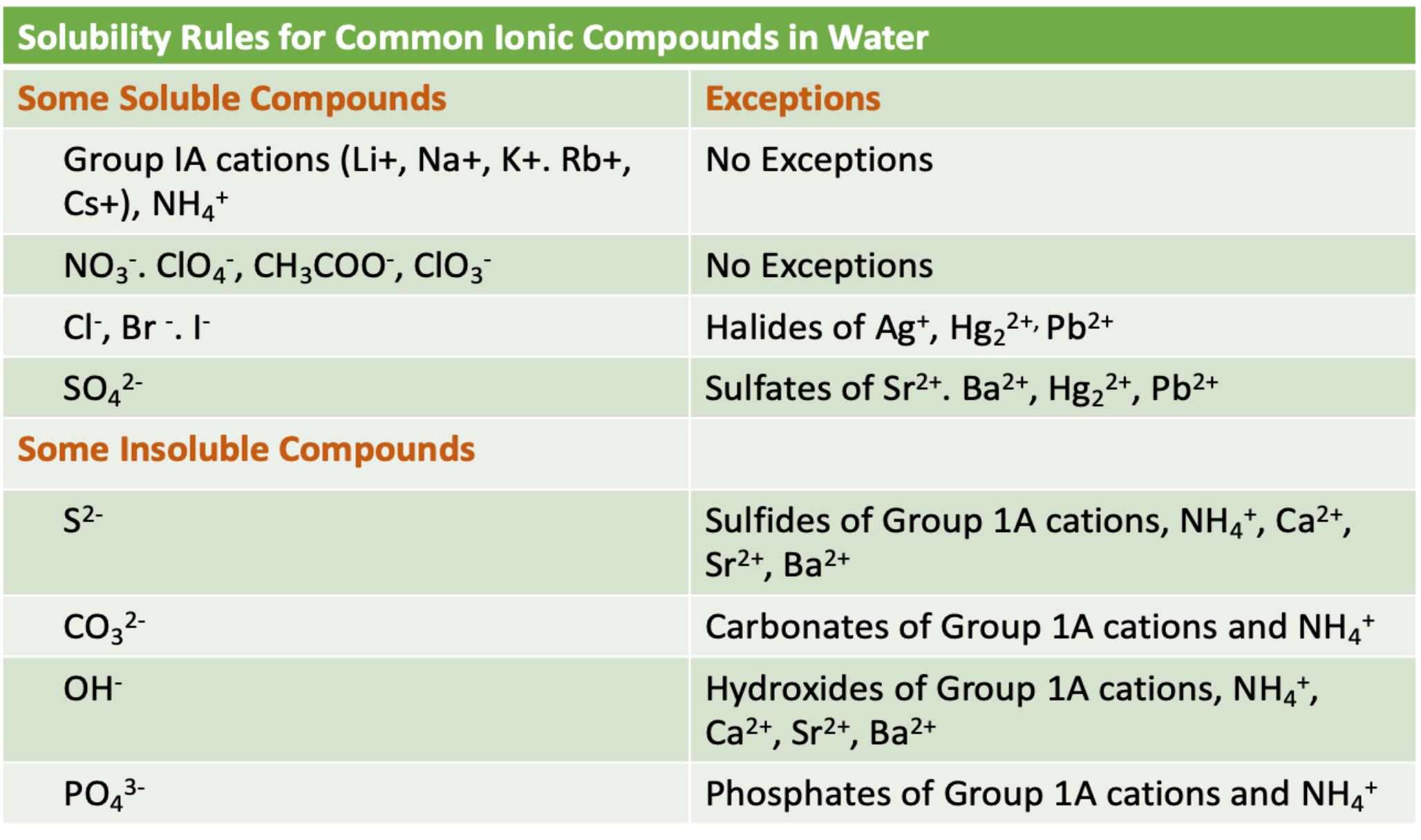
Solubility Rules Pathways to Chemistry
.PNG)
Solubility Rules Chart And Memorization Tips Images
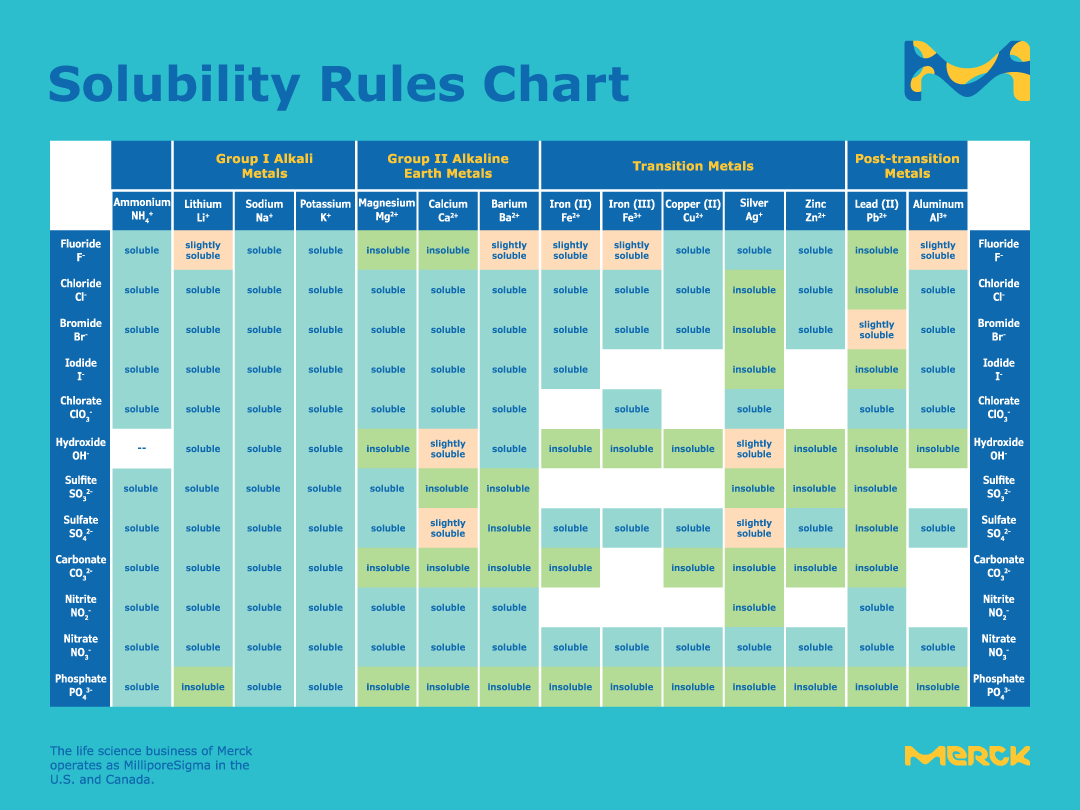
Solubility Rules for Ionic Compounds

Solubility Rules Chart and Memorization Tips
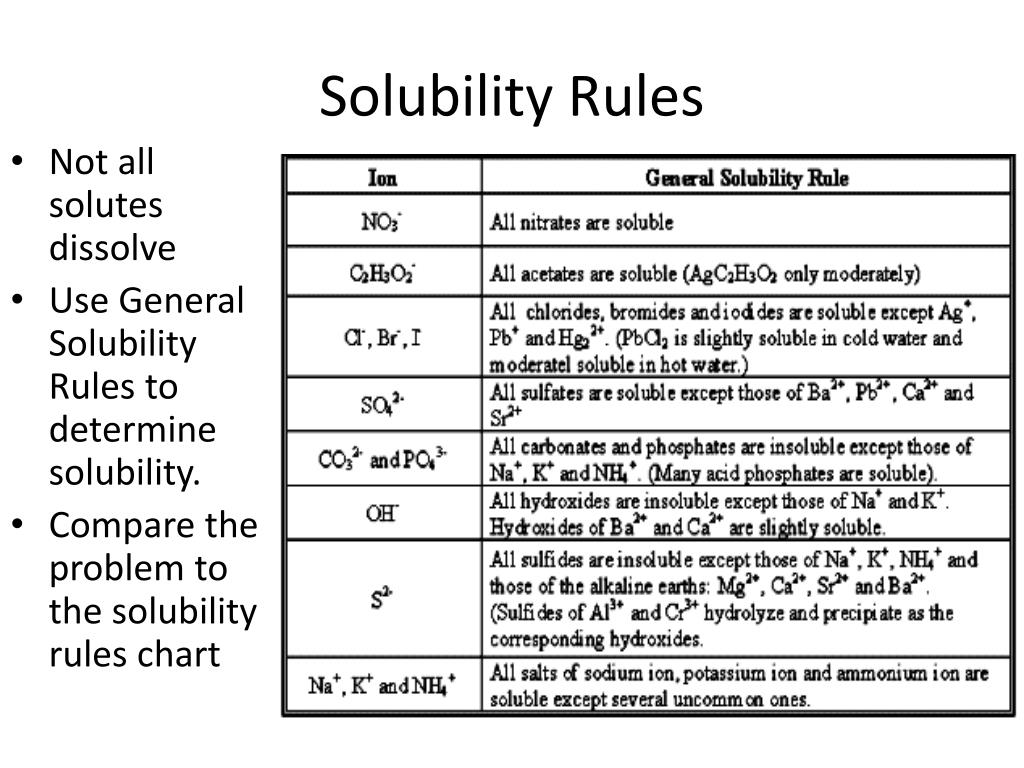
PPT Solubility Rules PowerPoint Presentation, free download ID5256674

Lab Solubility Rules at Landon Artis blog
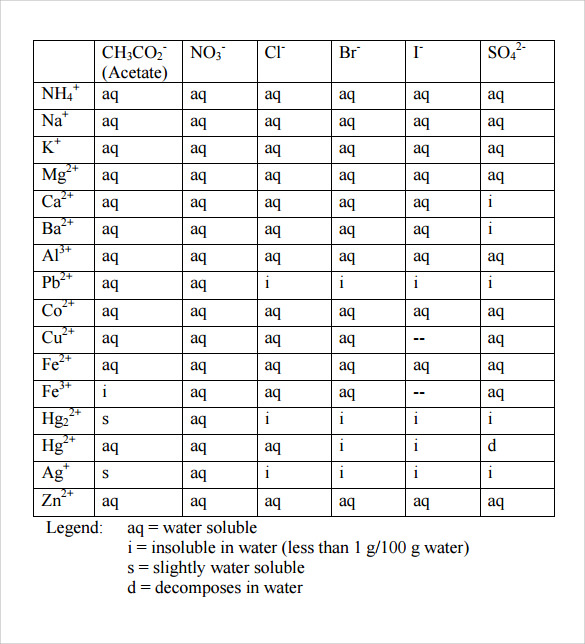
8+ Solubility Rules Chart Templates Sample Templates
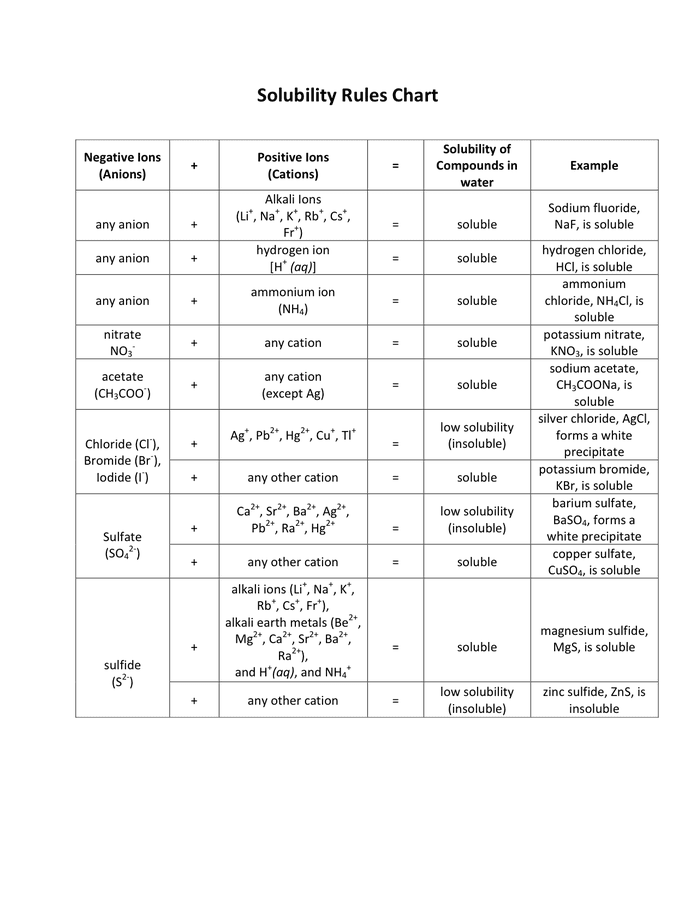
Solubility Rules Chart in Word and Pdf formats

Solubility Chart

Solubility Rules Abbreviated Chart Free Download
In Terms Of Quantity, Solubility Is The Maximum Concentration Of Solute That Dissolves In A Known Concentration.
The Concentration Of Salt In The Solution At This Point Is Known As Its Solubility.
It Is Measured In Terms Of The Maximum Amount Of Solute Dissolved In A.
In Such An Equilibrium, Le Chatelier's Principle Can Be Used To Explain Most Of The.
Related Post: