
Lay Vs Lie Chart
Lay Vs Lie Chart - Lie (“to recline”) i lie down for a nap at two o’clock each day. The main difference between lay and lie is that while lay means to put a person or an object down in a flat position. The action of the verb is being transferred from the actor to the direct. Lay and lie are two different verbs that mean different things. To lay is a transitive verb that requires a direct object. Refer to this chart so you will know when to use each form of the verbs lay and lie. In this article, we’ll break down the difference between lay and lie, including the past tense forms and the phrases lay down, lie down, and laid down. First, we’ll do the easy part, which is the present. It is an action taken by someone or something. On the other hand, lie means to remain or to move oneself in a resting. Here's the difference between lay vs. (present tense) i am lying down for a nap at two o’clock today. That’s why we have provided a quick chart below, as well as an explanation of use with examples to help you get lay vs. Lay and lie are two different verbs that mean different things. Refer to this chart so you will know when to use each form of the verbs lay and lie. Lie is a complete verb. Lay means to place something down flat, while lie means to be in a flat position on a surface. the key difference is that lay is transitive and requires an object to act upon, and lie is. Lie (“to recline”) i lie down for a nap at two o’clock each day. In this article, we’ll break down the difference between lay and lie, including the past tense forms and the phrases lay down, lie down, and laid down. The main difference between lay and lie is that while lay means to put a person or an object down in a flat position. That’s why we have provided a quick chart below, as well as an explanation of use with examples to help you get lay vs. Nothing a little prozac wouldn't cure Lie right each and every time. Refer to this chart so you will know when to use each form of the verbs lay and lie. Lie (“to recline”) i lie. (present tense) i am lying down for a nap at two o’clock today. Lay means to place something down flat, while lie means to be in a flat position on a surface. the key difference is that lay is transitive and requires an object to act upon, and lie is. Lay is transitive verb, which means it requires at least. Lie is a complete verb. On the other hand, lie means to remain or to move oneself in a resting. To lay is a transitive verb that requires a direct object. Lay and lie are two different verbs that mean different things. Lie (“to recline”) i lie down for a nap at two o’clock each day. Lie (“to recline”) i lie down for a nap at two o’clock each day. ‘lay’ versus ‘ lie’ in the present tense. In this article, we’ll break down the difference between lay and lie, including the past tense forms and the phrases lay down, lie down, and laid down. On the other hand, lie means to remain or to move. In other words, something or someone is receiving the action. Lie, along with lay lie examples and a simple chart that breaks it all down and will make it easier for you to know when to use each. Refer to this chart so you will know when to use each form of the verbs lay and lie. Here's the difference. That’s why we have provided a quick chart below, as well as an explanation of use with examples to help you get lay vs. Lie (“to recline”) i lie down for a nap at two o’clock each day. Lay means to place something down flat, while lie means to be in a flat position on a surface. the key difference. ‘lay’ versus ‘ lie’ in the present tense. That’s why we have provided a quick chart below, as well as an explanation of use with examples to help you get lay vs. (present tense) i am lying down for a nap at two o’clock today. In other words, something or someone is receiving the action. Lie (“to recline”) i lie. Lie, along with lay lie examples and a simple chart that breaks it all down and will make it easier for you to know when to use each. In other words, something or someone is receiving the action. Lay is transitive verb, which means it requires at least one. On the other hand, lie means to remain or to move. Nothing a little prozac wouldn't cure Lie right each and every time. Lay means to place something down flat, while lie means to be in a flat position on a surface. the key difference is that lay is transitive and requires an object to act upon, and lie is. Lay and lie are two different verbs that mean different things.. Lie right each and every time. In this article, we’ll break down the difference between lay and lie, including the past tense forms and the phrases lay down, lie down, and laid down. It is an action taken by someone or something. In other words, something or someone is receiving the action. ‘lay’ versus ‘ lie’ in the present tense. First, we’ll do the easy part, which is the present. (present tense) i am lying down for a nap at two o’clock today. It is an action taken by someone or something. Lie right each and every time. That’s why we have provided a quick chart below, as well as an explanation of use with examples to help you get lay vs. ‘lay’ versus ‘ lie’ in the present tense. Today’s topic is “ lay” versus “ lie.” here are four ways to remember the difference: Lay and lie are two different verbs that mean different things. In this article, we’ll break down the difference between lay and lie, including the past tense forms and the phrases lay down, lie down, and laid down. Lay means to place something down flat, while lie means to be in a flat position on a surface. the key difference is that lay is transitive and requires an object to act upon, and lie is. Lie, along with lay lie examples and a simple chart that breaks it all down and will make it easier for you to know when to use each. Refer to this chart so you will know when to use each form of the verbs lay and lie. The action of the verb is being transferred from the actor to the direct. Lie (“to recline”) i lie down for a nap at two o’clock each day. In other words, something or someone is receiving the action. Here's the difference between lay vs.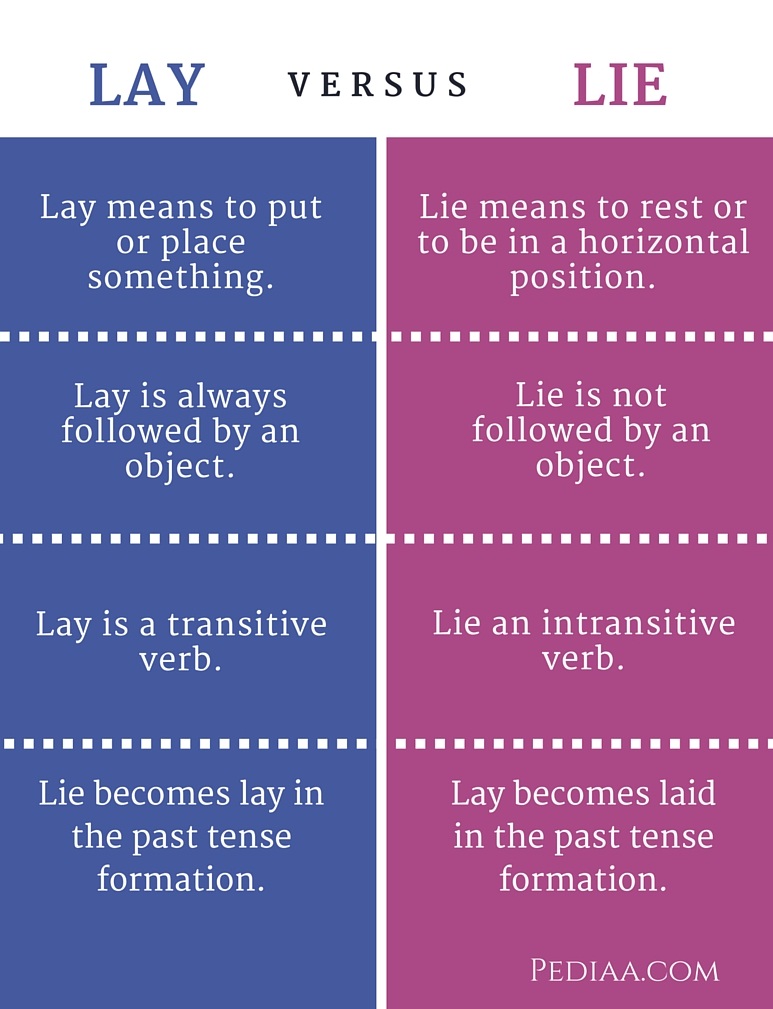
Difference Between Lay and Lie
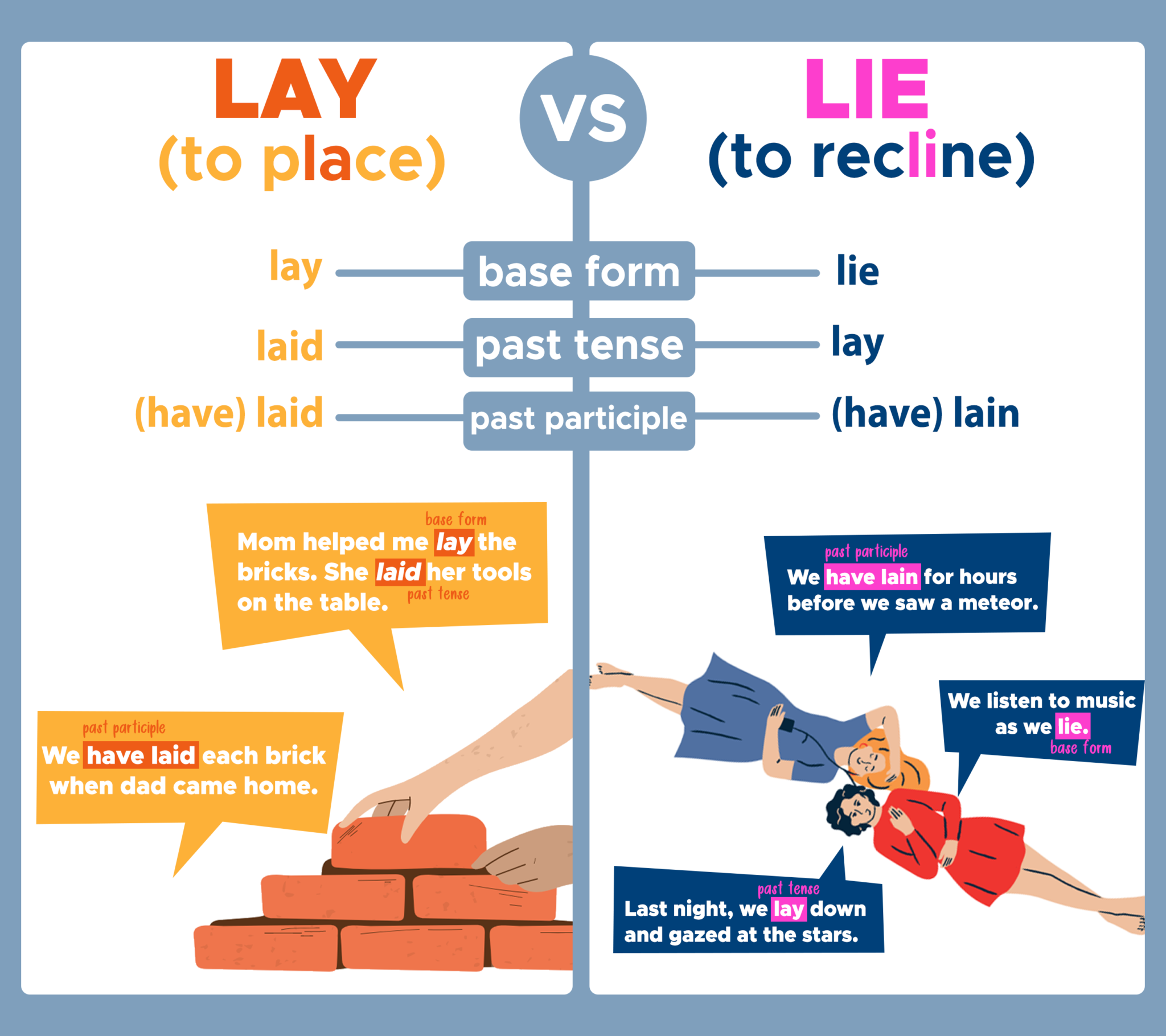
Lay vs Lie What’s the Difference? Curvebreakers
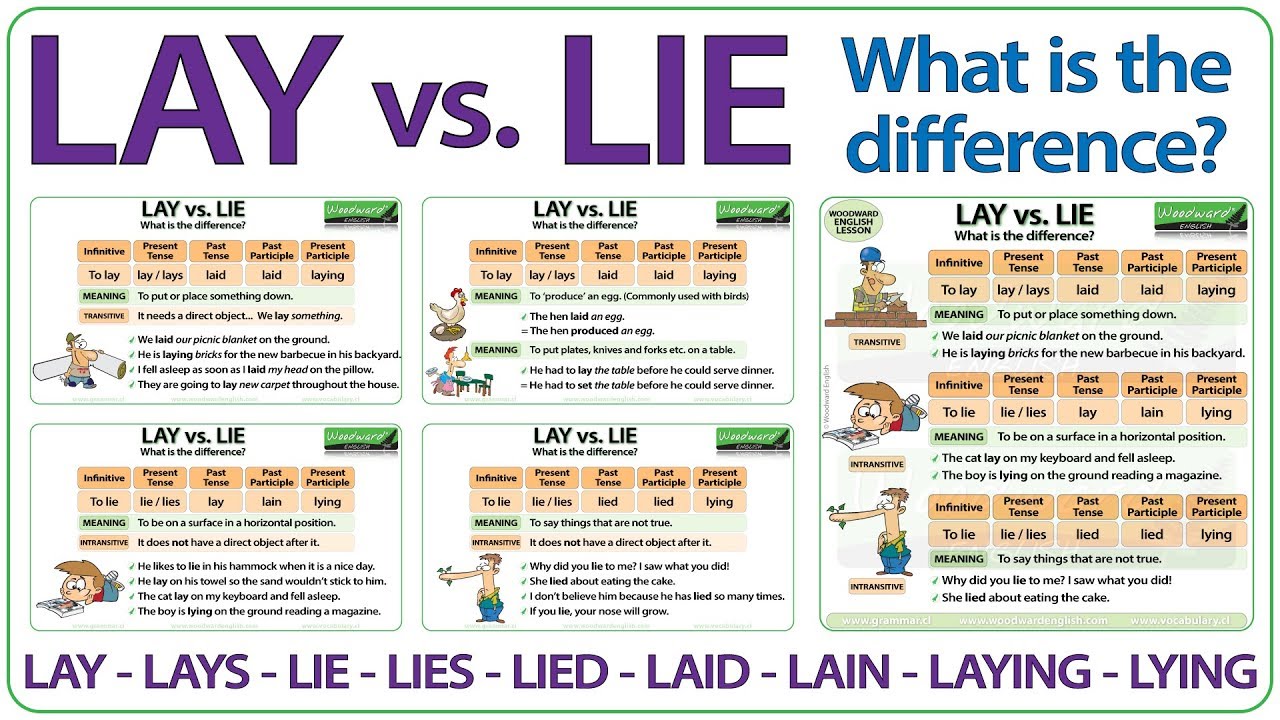
LAY vs. LIE in English What is the difference? Learn English Grammar Rules YouTube

The difference between LAY and LIE in English Common Mistakes in English ESOL ESL

LAY vs LIE How to Use Lay vs Lie Correctly? ESL Forums
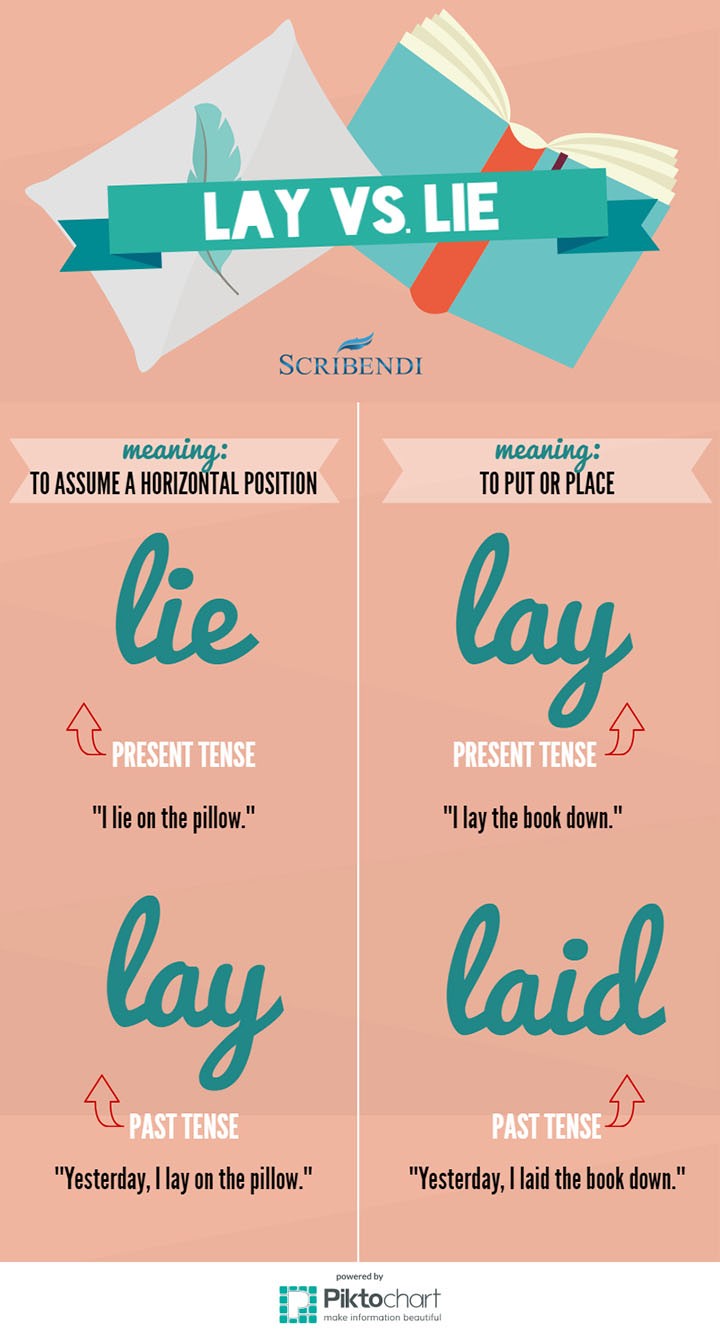
Lay vs. Lie Explained (Infographic Included) Scribendi

Lay vs lie chart 2 Confusing words, Good grammar, Writing words

Lay vs. Lie What’s the Difference between Lie vs. Lay?

Mastering the Lay vs. Lie dilemma

Learn English Today What's The Difference? LIE vs LAY
On The Other Hand, Lie Means To Remain Or To Move Oneself In A Resting.
Lay Is Transitive Verb, Which Means It Requires At Least One.
Nothing A Little Prozac Wouldn't Cure
To Lay Is A Transitive Verb That Requires A Direct Object.
Related Post: